Tips
How to pick out energy-efficient windows
Energy-efficient windows provide many benefits. By helping to keep heated and air conditioned air inside your home (and outside air outside) they can make your home’s temperature more comfortable, especially when they’re incorporated into a home whose overall design is efficient.
Energy-efficient windows can also help reduce utility bills and increase your property’s value, helping you saving money over time. So, what is an energy-efficient window? The short answer is a well-designed window that’s thermally broken (designed to block energy transfer between inside and outside) and features glass that is energy efficient. Glass is a vital part of the equation because it’s what most of a window surface area consists of. There are multiple ways to improve glass efficiency, which we’ll get into below.
When it comes to energy efficiency, there are multiple factors that affect window performance, including: the type of window, window glass, and accessory selections, like grilles. We’ll explain what to focus on in order to pick out the most energy-efficient windows for your home, including climate-specific selections.
How to pick out an energy-efficient window?
Selecting an energy-efficient window depends on your climate, your aesthetic preferences, and your budget. This means there’s not a single energy-efficient window that’s better than all others.
To pick the right window, you should focus on a few key selections, including:
- Window type: We offer many different types of windows — from the most popular options like double-hung and casement to many more. When selecting a type, it’s important to know that a window’s design can help make it more energy efficient. For example, picture windows are the most efficient because they don’t open. We’ll tell you about the most efficient types of windows below.
- Glass type: Double-pane glass and triple-pane glass are the two types of glass we offer with our windows. Both are insulated glass units (IGUs), so they offer superior insulation compared to the single-pane windows you might find on older homes. We’ll explain how to decide between these two types of IGUs below.
- Low-emissivity (Low-E) coatings: These glass coatings help boost a window’s performance by reflecting energy in a way that keeps conditioned air inside your home and outside air outside. All of our windows come with Low-E/Low-E4 standard. However, there are other Low-E glass options. We’ll explain what you need to know to choose the best one for your home.
While there are some universal truths — a picture window is always the most energy-efficient window and triple-pane glass is the most insulating — that doesn’t mean triple-pane picture windows are necessarily the best options for you.
Next, let’s talk about these selections in more detail, so you can pick out a window that will perform efficiently for your climate.
What types of windows are most efficient?
Not all window types are equally energy efficient. If you want higher performance, focus on casement, and awning windows where you need an opening (operable) window. Casement and awning windows have a single sash, as opposed to double-hung windows, which have two sashes. The combination of a simpler design and their seal, which tightens when the wind blows against them, makes casement and awning windows more energy efficient.
When you don’t need to open your window, you can select a picture window, which doesn’t open (fixed). This makes picture windows the most efficient window type of all. Consider integrating picture windows next to patio doors, anywhere a window will be hard to reach, and in combination with other windows that do open. This approach can help improve energy efficiency while still giving you the fresh air you need.
Did you know? If you love the look of a double-hung window but need a more energy-efficient option, there are ways to trick the eye. You can add a simulated check rail to a casement window. This horizontal bar across the window’s glass gives the appearance of two sashes, like in the example above.
If you’re looking for the most traditional look, you could add grilles too, but it's important to keep in mind that if grilles are located between the panes of glass and touch the glass (called full divided light), they can help transfer energy between indoors and outdoors, decreasing efficiency. A great way to get around this is with the energy spacer bar. Its clever design gives an authentic look while helping boost performance since it doesn’t touch the glass.
What is a double-pane window? A triple-pane window?
See the difference | Dual-pane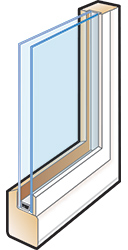 | Triple-pane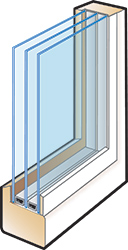 |
|---|---|---|
What is it? | Dual-paneA dual-pane, or double-pane, IGU is made of two panes of glass with an air space in between. The air space in our windows is usually filled with an argon-gas blend that provides extra insulation because it’s denser than air. It comes standard with Low-E/Low-E4® glass to further boost efficiency. Other climate-specific Low-E glass is also available. | Triple-paneA triple-pane IGU has three panes of glass and two air spaces in between. The air spaces are usually filled with an argon-gas blend. Triple-pane comes standard with Low-E/Low-E4 glass. If additional thermal performance or climate-specific performance is required or desired, there are multiple Low-E glass options that can be selected. |
Cost | Dual-paneA dual-pane IGU is the most cost-effective choice and is a good option if you live in a warmer climate. | Triple-paneA triple-pane IGU is more expensive than a dual-pane IGU because it uses more materials. |
Energy efficiency | Dual-paneWhile a dual-pane IGU is less energy efficient than a triple-pane IGU, it can offer the performance needed in warmer climates where you need less insulation. | Triple-paneA triple-pane IGU is the most energy efficient due to the additional air space and opportunity to add more Low-E coating combinations. It’s most impactful in northern climates. |
Soundproofing | Dual-paneA dual-pane IGU won’t reduce sound transmission as much as triple-pane. | Triple-paneA triple-pane IGU adds thickness that helps muffle sound. |
Install Considerations | Dual-paneDual-pane is standard across the window and door industry, so installing a window with this type of IGU won’t add complication. | Triple-paneA triple-pane IGU is 1.5 times heavier than a dual-pane IGU. The heavier weight could increase install costs due to the need for additional labor or equipment. |
Products | Dual-paneDual-pane comes standard with all our windows and doors. | Triple-paneYou can find triple-pane glass IGUs available with our E-Series, A-Series, and 400 Series windows and doors. Triple-pane is also available with select 100 Series windows and 200 Series doors. |
Talk like a pro: Thermal performance
Climate TypeWarm-mild 🌞 | Key MeasuresThe Solar Heat Gain Coefficient (SHGC) value is the measure of solar heat gain that is generated when sunlight shines through a window. Higher numbers are better, because lower numbers mean less heat gain. | Glass TypeA dual-pane IGU with Low-E/Low-E4® glass is the standard on all our windows. This may give the performance needed in a warm or mild climate. | Low-EOther Low-E options ideal for warmer climates, include Sun glass and SmartSun® glass with Heatlock® technology. Both of these help provide additional protection from the sun. |
Climate TypeCold❄ | Key MeasuresThe U-Factor value is the measure of the rate of energy loss. Lower numbers are better here, because U-Factor values measure how fast heat moves through the window assembly. | Glass TypeA triple-pane IGU is the most energy-efficient option and improves insulation, making it the ideal choice for cold climates. | Low-EA combination of PassiveSun® glass and Heatlock® technology works well to help the sun heat the home. |
What is a low-emissivity glass (Low-E) glass coating?
One of the ways windows can be optimized for a specific climate zone is with glass coatings. Low-E/Low-E4 glass coatings come standard with our windows. They are ultra thin, generally transparent, and improve window efficiency. These coatings work by reflecting or absorbing heat. They can also be combined so different coatings are used on different panes of glass in order to help create optimal performance.
One of the reasons triple-pane windows offer such superior performance is because the third pane offers an additional opportunity to include Low-E coatings. Here is what you need to know:
Low-E coatings for cold climates
Depending on the conditions, it might make sense to consider a coating that will help heat up the home in the winter, or one that will help protect the home further from the sun’s intensity. Consider the following:
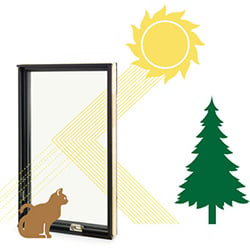
Low-E4® Glass
Low-E4® glass is a good option in most climates, including climates with four seasons because it helps keep heat out in the warm months and in during the cold months.
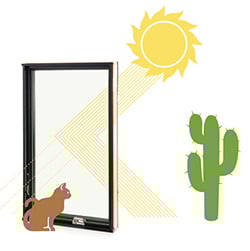
SmartSun™ glass
SmartSun™ glass gives the benefits of Low-E while also helping to reduce 95% of harmful UV rays, which can cause fading to your furnishings and décor. Find this option on all our products.
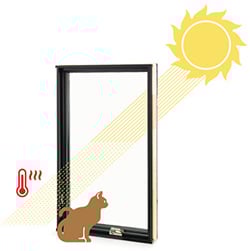
PassiveSun® glass
PassiveSun® glass is meant for climates where extensive heating is required. It helps you make the most of the sun’s warmth in heating your home and is available on all our products.
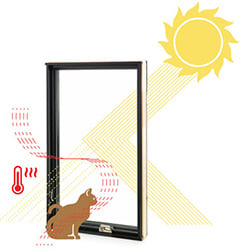
HeatLock® technology
HeatLock® technology is made for the northernmost climates. It creates a barrier that helps keep warming rays from the sun inside and works best in homes with whole-house air exchangers or dehumidifiers. It’s available on most of our products.
The combination of PassiveSun glass with HeatLock technology can be a good one in a Northern climate, because it can help insulate the home while also heating it with the power of the sun. This combination might be useful in a home that’s been designed according to passive house principles.
Low-E coatings for mild to hot climates
There are specific glass coatings that can help keep the sun from heating your home too much and even help reduce harmful UV rays from coming into your home, including:

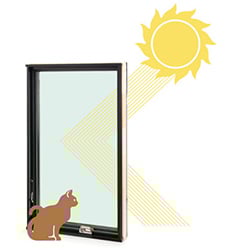
Sun glass
Sun glass is ideal for a sunny climate. This coating helps reflect heat from the sun with a subtle tint that’s slightly darker than SmartSun™ glass.
The combination of SmartSun glass with Heatlock® technology can be a good one in mild to hot climates. It helps with insulation while reducing the heat gained from the sun.
No matter your climate, your contractor, builder, or window dealer can help you select the best combination of coatings for your climate when you order.
Talk like a pro: Solar heat gain
Other factors affecting energy performance
As you’ve no doubt gathered, windows can be customized for energy-efficient performance in many different ways. Two additional selections that can have a big impact are grilles and breather tubes. You can forego grilles or select a more energy-efficient option, see below, but breather tubes are typically required at high altitudes. However, if you’re aware of the effect these features have, you can make other selections to counter their impact on performance.
Grilles: When they touch both panes of glass, these ornamental bars decrease efficiency by conducting energy and decreasing the insulating power of the air space. This is why the energy spacer bars available with A-Series windows and doors were designed in a way that avoids touching the glass. They’re a great option if you want the authentic look of full divided light grilles. But the most efficient choice of all is to skip grilles altogether.
Breather tubes: At elevations above 4,00 feet, these tubes prevent windows from becoming pressurized by allowing air to escape from the space in between window panes. Windows created for these elevations don’t include the argon-gas blend typically added to the air space in our windows, so they are less efficient overall. But don’t worry if you live at high altitude, you can lean into the selections highlighted above to help improve energy efficiency when breather tubes are required.
Want to save money on energy-efficient windows?
Energy-efficient windows can help save you money on utilities, increase the value of your home, and even help you earn a tax credit. Here’s what to know:
- Utility savings: This will vary based on your climate, window type, utility rates, and other elements of your home. However, on average, ENERGY STAR® certified windows can save 13% on energy bills every year.
- Home value: Energy-efficient windows also have a direct impact on the value of your home- homeowners will pay premium for a house with Andersen® brand windows and doors.* The 2025 national average return-on-investment (ROI) for wood window replacement is 70%, according to data from The Journal of Light Construction.
- Tax credit: If you replaced windows in an existing home with new windows that meet ENERGY STAR Most Efficient criteria in the 2025 calendar year, you can qualify for a tax credit covering up to 30% off the cost — with a maximum credit of $600 on windows.**
What is ENERGY STAR?
You’ve no doubt seen the ENERGY STAR label on appliances and other products. It was created by the U.S. Environmental Protection Agency to make it easier for consumers to identify energy-efficient products. When applied to windows, it means the windows have met performance requirements to reduce the transfer of heat in a specific climate zone.
Understanding energy-efficiency measures
What it measures | U-factorHow well a product prevents heat from escaping | Solar heat gain coefficient (SHGC)The product's ability to block heat caused by sunlight | Visible transmittance (VT)The amount of light allowed through the window |
|---|---|---|---|
Performance impact | U-factorLower ratings mean better insulation | Solar heat gain coefficient (SHGC)Lower ratings mean less heat transfer | Visible transmittance (VT)Higher ratings mean more light |
Measurement ranges | U-factorScale of 0-1 | Solar heat gain coefficient (SHGC)Scale of 0-1 | Visible transmittance (VT)Scale of 0-1 |
FAQs: Still have questions about energy efficient windows?
*2024 Andersen brand surveys of U.S. contractors, builders, architects, and homeowners
**This is a summary of certain tax credit elements related to windows, skylights and doors as set forth in Section 25C of the Internal Revenue Code as modified by the Inflation Reduction Act of 2022, Public Law No. 117-169, which was signed by the President on August 16, 2022, which among other things, extends the current tax credits with amendments in Section 25C of the Internal Revenue Code on eligible property purchased and installed through December 31, 2032. Andersen bears no responsibility for determining whether a particular purchase or application qualifies for the tax credit. Further, Andersen does not intend to and is not providing legal or tax advice. Andersen recommends that purchasers consult with their own tax advisor and/or the IRS to determine whether products purchased for a particular application qualify for the tax credit.
*Our windows can also be ordered air-filled as needed for various reasons, including to meet requirements in high-altitude locations.
